Introduction to Circuitry
Do you know how your smartphone or computer actually "thinks"? It might seem like magic inside: complex algorithms are running, neural networks are operating, and games are launching. But at the deepest, hardware level, a processor can neither read, nor calculate, nor understand commands. It understands only one thing: whether there is an electrical current or not.
All digital electronics communicate in a language of two states. If there is voltage running through a wire (it lights up), it's a logical one ("1", true). If there is no voltage, it's a logical zero ("0", false).
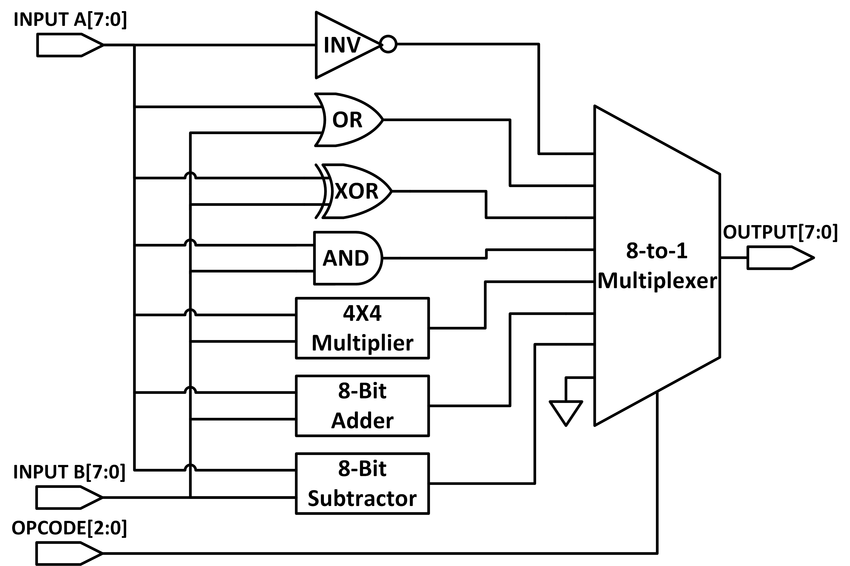
Circuitry is the engineering art of connecting wires and tiny mechanisms so that complex logic emerges from primitive zeros and ones. These mechanisms are called logic gates. Each gate performs one very simple task: it looks at the incoming signals and, following strict rules, decides whether to let the current pass through or not.
By combining tens, hundreds, and millions of such elements, engineers teach a machine to add numbers, remember passwords, and display graphics on a screen. In this library, we will break down the basic gates that serve as the building blocks for any modern processor.